
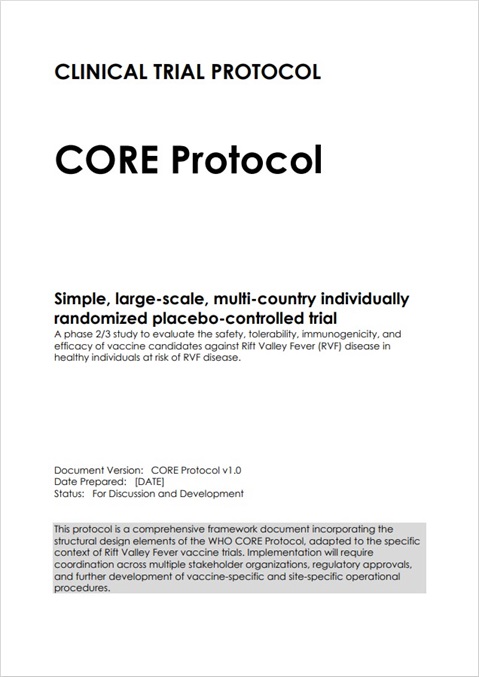
Rift Valley fever CORE protocol
Overview
Rift Valley fever (RVF) is a zoonotic viral disease caused by Rift Valley fever virus (RVFV). The virus is transmitted to humans through contact with infected animals (livestock, wildlife) and their products, as well as through mosquito vectors during epizootics. Human outbreaks are characterized by sudden, explosive increases in cases during periods of unusually high rainfall and breeding of Aedes mosquito vectors.
Recent outbreaks have demonstrated the public health significance of RVF. During outbreak periods, attack rates are highest among individuals with occupational exposure to infected animals, including livestock handlers, abattoir workers, herders, and veterinarians.
There is an urgent need to test the safety, immunogenicity, and efficacy of candidate vaccines that have been developed against RVF. Limited data exist on whether experimental vaccines will provide benefit to people at risk of or recently exposed to RVF.
This protocol is designed to generate robust evidence on vaccine safety, immunogenicity, and efficacy through a coordinated international trial platform that can be rapidly activated in response to outbreak detection and can combine data across multiple outbreaks to achieve adequate sample sizes for reliable conclusions.